
[BLOG] Classroom Survival for New Teachers #5: Managing Mixed-Ability Classes as a New Teacher
New teacher classroom management often feels hardest in mixed-ability classes, where students progress at different speeds and need different levels of support. This post breaks down what actually works in mixed-level classrooms and offers practical strategies and classroom-ready tips to help new teachers stay sane, fair, and effective.
Kaya
3/31/2026
Please keep in mind that the opinions posted on this blog are my own.
Everybody might have a different experience and opinions, and that's OK.
Few things unsettle new teachers faster than realising that “the class level” is mostly a polite fiction. In mixed-ability classes, some students race ahead while others quietly drown, and new teacher classroom management can start to feel like spinning plates on a moving bus. Teaching in this context is not about finding the perfect level; it is about designing lessons that flex without collapsing.
Mixed-ability teaching is challenging, yes, but it is also normal, manageable, and far less personal than it feels in the moment. Once you stop trying to teach everyone the same thing in the same way, the classroom becomes easier to steer.
The Myth of One Perfect Task
Challenge:
New teachers often search for a single activity that works equally well for everyone. In mixed-ability classes, this usually leads to frustration: stronger students finish early and get bored, while weaker students feel lost. New teacher classroom management suffers when tasks are all-or-nothing.
Practical tips:
Design a core task that everyone can access.
Add optional extensions for faster students.
Make “early finishers” part of the plan, not a problem.
Example:
“Everyone completes questions 1–3. If you finish early, choose one extra challenge from the board.”
Using Difficulty, Not Speed, to Differentiate
Challenge:
Many new teachers differentiate by giving weaker students less and stronger students more. This can feel unfair and demotivating. In mixed-ability classes, speed is not the same as ability, and rushing rarely leads to better learning.
Practical tips:
Keep the task length the same, but vary complexity.
Offer support tools instead of easier tasks.
Let students choose their level of challenge occasionally.
Example:
“You can answer using simple sentences, or try adding reasons and examples.”
Pairing and Grouping Without Chaos
Challenge:
Mixed-ability grouping can backfire when stronger students dominate and weaker students disengage. New teacher classroom management becomes harder when group work feels unfair or unbalanced.
Practical tips:
Assign roles so everyone contributes.
Rotate pairs instead of keeping fixed “strong–weak” patterns.
Make expectations for collaboration explicit.
Example dialogue:
“One person explains, one asks questions, and one writes. Then you switch.”
Teaching to the Middle Without Ignoring the Edges
Challenge:
New teachers often feel guilty about “leaving someone behind” or “holding others back.” Teaching only to the strongest or weakest students creates imbalance and resentment. Mixed-ability classes require strategic compromise, not perfection.
Practical tips:
Aim explanations at the middle of the group.
Support weaker students with visuals and examples.
Stretch stronger students through follow-up questions.
Example:
“That’s a good basic answer. How could we make it more precise?”
Normalising Different Paces Publicly
Challenge:
Students often compare themselves to others and assume speed equals intelligence. New teacher classroom management becomes harder when students feel exposed or inferior in mixed-level settings.
Practical tips:
Talk openly about different learning speeds.
Praise strategies and effort, not speed.
Avoid public comparisons between students.
Example dialogue:
“Fast doesn’t mean better. It just means fast. Accuracy and ideas matter more.”
Letting Go of the Idea of Total Balance
Challenge:
New teachers often exhaust themselves trying to make every lesson perfectly balanced for everyone. Mixed-ability teaching does not work that way. Some lessons will favour some students more than others, and that is not failure.
Practical tips:
Think in sequences, not single lessons.
Accept uneven moments as part of the process.
Focus on long-term progress, not instant equality.
Managing mixed-ability classes as a new teacher is not about fixing differences, but about working with them intelligently. New teacher classroom management improves when tasks are flexible, expectations are clear, and comparison is removed from the equation. Mixed-level classrooms are challenging, but they are also rich, realistic learning environments. When you stop aiming for perfect balance and start aiming for thoughtful structure, mixed-ability teaching becomes demanding in a productive, not overwhelming, way.
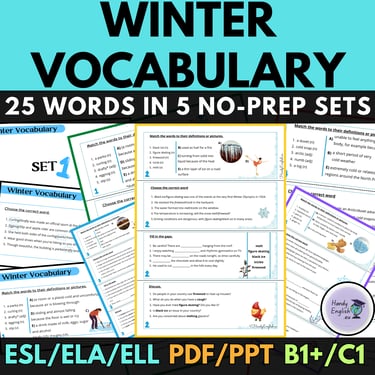
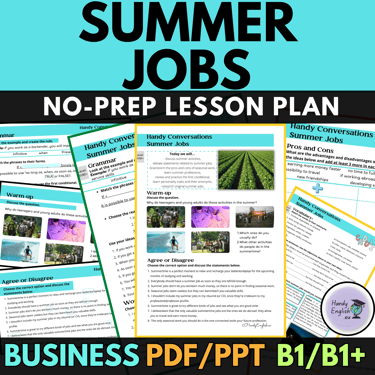
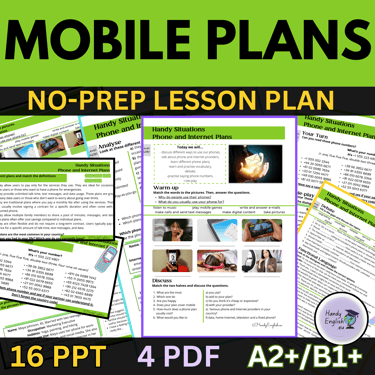
Want practical tools for managing mixed-ability classes without burning out?
Explore my Handy English materials for new teachers and get classroom-ready strategies designed for the reality of mixed-level teaching.




Get in touch!
Copyright Handy English 2021
”I used this with an adult ELL tutee of mine. I appreciate that the language was accessible for multiple proficiency levels, but the content wasn't obviously geared for children and still useful for older learners.”
August 7, 2023
”Another great resource from Handy English! I used it to give my students more in-depth practise into quantifiers and restaurant language. It's great resource and can be used after the students learn the basics of language for the restaurants and quantifiers. Definitely helped solidify what they learnt.”
February 5, 2023
”Love this resource. Great for fast finishers and also those in small ESL groups. Great for all macro skills as discussion and brainstorming is a great precursor for writing submissions.”
- Gail M.
June 25, 2023
Here's what other ESL Teachers say
Handy English: 4.8/5
”This was a wonderful resource for my students. It helped me introduce them easily to new concepts and it was quite engaging. Thanks!”
- Kiara B.
October 10, 2023
”Great resource for learning vocabulary, which supports comprehension and speaking skills.”
- Lori-Ann W.
September 29, 2023
”What a great way to get a healthy debate going. My students struggle with impulse control and they all have kept it kind and appropriate.”
- Alicia H.
September 17, 2023


