
[BLOG] Classroom Survival for New Teachers #6: Noise, Chaos, and Control: Finding Your Teacher Presence
New teacher classroom management often feels like a constant battle between noise, chaos, and control. This post reframes “teacher presence” as a skill you build rather than a personality trait you either have or don’t, with practical strategies and classroom examples to help new teachers project calm authority without shouting or performing.
Kaya
4/4/2026
Please keep in mind that the opinions posted on this blog are my own.
Everybody might have a different experience and opinions, and that's OK.
At some point in your early teaching life, you will stand in a noisy classroom and think: I have absolutely no presence. Students are talking, chairs are moving, and your carefully planned activity is dissolving into a low-level hum of chaos. New teacher classroom management often feels like a volume contest you are losing. Yet experienced teachers are rarely louder, stricter, or more intimidating.
What they have is presence: a combination of clarity, consistency, and emotional control that stabilises the room. Teacher presence is not about domination; it is about becoming the calm centre around which classroom energy reorganises itself.
Noise Is Not the Enemy
Challenge:
New teachers often interpret noise as failure. In language classrooms especially, sound is inevitable and often productive. Trying to eliminate noise entirely creates tension and turns you into a referee instead of a teacher. Chaos emerges not from sound itself, but from unclear expectations about what kind of sound is acceptable.
Practical tips:
Define acceptable noise for each activity before it begins.
Model volume instead of demanding silence.
Separate “working noise” from “off-task noise” in your own mind.
Example dialogue:
“During pair work, quiet talking is fine. When I raise my hand, we stop.”
Control Comes From Predictability, Not Force
Challenge:
New teachers often try to regain control by tightening rules suddenly or raising their voice. This usually escalates tension rather than resolving it. Classroom control is more effective when students know exactly what will happen next and what your response will be.
Practical tips:
Use the same signals for attention every lesson.
Keep consequences simple and consistent.
Respond calmly, even when behaviour is frustrating.
Example dialogue:
“We’re stopping now. Eyes on me. Thank you.”
Your Body Speaks Before You Do
Challenge:
Teacher presence is communicated physically long before words arrive. New teachers often pace, fidget, or over-gesture when nervous, which signals uncertainty. Students unconsciously respond to posture, eye contact, and movement.
Practical tips:
Stand still when giving instructions.
Make eye contact with the group, not just individuals.
Move with purpose, not speed.
Example:
Pause. Face the class. Wait until attention settles. Then speak.
Silence Is a Tool, Not a Weakness
Challenge:
Many new teachers rush to fill silence because it feels uncomfortable. In doing so, they accidentally teach students that noise controls the room. Strategic silence, on the other hand, often resets attention more effectively than speaking louder.
Practical tips:
Stop talking instead of raising your voice.
Use a visible cue (hand raised, countdown on fingers).
Wait calmly, even if it feels long.
Example dialogue:
(Teacher raises hand and waits. Says nothing.)
Consistency Builds Presence Faster Than Confidence
Challenge:
New teachers often wait to feel confident before acting consistently. Unfortunately, confidence usually arrives after routines are established, not before. Teacher presence grows through repetition, not personality.
Practical tips:
Use the same phrases for instructions and corrections.
Apply rules the same way every time.
Avoid changing expectations mid-lesson.
Example dialogue:
“Phones away. Thank you.”
(Same words, every time.)
You Are Allowed to Be Calm and Boring
Challenge:
New teachers sometimes feel pressure to constantly entertain to maintain control. This creates exhaustion and instability. Presence does not come from performance; it comes from reliability.
Practical tips:
Let routines carry the lesson, not your energy alone.
Save enthusiasm for moments that matter.
Allow yourself to be neutral, steady, and predictable.
Noise, chaos, and control are not signs that you lack teacher presence; they are part of learning how to build it. New teacher classroom management improves when you stop fighting noise and start structuring it, stop chasing control and start offering predictability. Teacher presence is not about volume, charisma, or authority borrowed from confidence. It is about calm clarity, repeated signals, and emotional steadiness. When you become predictable, the room becomes manageable - and your presence quietly does the work for you.
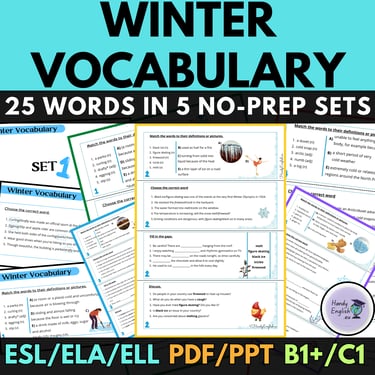
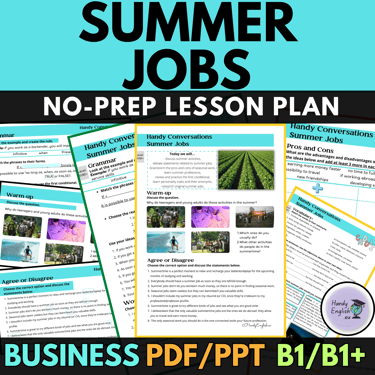
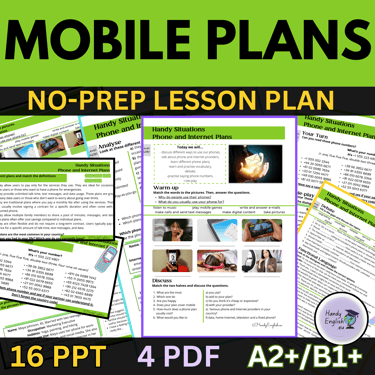
Want classroom management tools that help you build presence without burning out?
Explore my Handy English materials for new teachers and get practical strategies for creating calm, focused classrooms that still allow real communication.



Get in touch!
Copyright Handy English 2021
”I used this with an adult ELL tutee of mine. I appreciate that the language was accessible for multiple proficiency levels, but the content wasn't obviously geared for children and still useful for older learners.”
August 7, 2023
”Another great resource from Handy English! I used it to give my students more in-depth practise into quantifiers and restaurant language. It's great resource and can be used after the students learn the basics of language for the restaurants and quantifiers. Definitely helped solidify what they learnt.”
February 5, 2023
”Love this resource. Great for fast finishers and also those in small ESL groups. Great for all macro skills as discussion and brainstorming is a great precursor for writing submissions.”
- Gail M.
June 25, 2023
Here's what other ESL Teachers say
Handy English: 4.8/5
”This was a wonderful resource for my students. It helped me introduce them easily to new concepts and it was quite engaging. Thanks!”
- Kiara B.
October 10, 2023
”Great resource for learning vocabulary, which supports comprehension and speaking skills.”
- Lori-Ann W.
September 29, 2023
”What a great way to get a healthy debate going. My students struggle with impulse control and they all have kept it kind and appropriate.”
- Alicia H.
September 17, 2023


