
[BLOG] Classroom Survival for New Teachers #8: Transitions That Don’t Kill Your Lesson (From Activity to Activity)
New teacher classroom management often breaks down not during activities, but between them. This post shows how to handle lesson transitions calmly and clearly, with practical strategies and classroom language that help new teachers move from one activity to the next without losing focus, time, or authority.
Kaya
4/10/2026
Please keep in mind that the opinions posted on this blog are my own.
Everybody might have a different experience and opinions, and that's OK.
Many new teachers plan solid activities and still leave class feeling unsettled, rushed, or strangely exhausted. The problem is often not what you taught, but what happened between activities. Transitions are the invisible joints of a lesson, and when they are weak, everything wobbles.
New teacher classroom management suffers most in these moments: students start chatting, energy spikes or collapses, and suddenly the lesson feels out of control. Smooth transitions are not about speed or strictness; they are about signalling clearly that one phase is ending and another is beginning. Once you learn to manage transitions deliberately, lessons start to feel calmer, tighter, and far more intentional.
Why Transitions Are Where Lessons Go to Die
Challenge:
New teachers often treat transitions as neutral pauses rather than active teaching moments. Unfortunately, students experience them as empty space. When no one knows what is happening next, students fill the gap with chatter, phones, or confusion. By the time the next activity begins, the room has already drifted.
Practical tips:
Assume students need guidance between tasks, not just during them.
Never stop one activity without signalling what comes next.
Treat transitions as part of your lesson plan, not an afterthought.
Example dialogue:
“Finish this sentence. In 30 seconds, we’re switching to pair work.”
Ending an Activity Is a Skill
Challenge:
New teachers often let activities fade out instead of ending them. Students keep talking, some finish early, others keep working, and attention fragments. Classroom management weakens because there is no clear ending signal.
Practical tips:
Use a consistent closing signal (timer, raised hand, countdown).
Give a short warning before stopping an activity.
End activities decisively, even if they are going well.
Example dialogue:
“Ten seconds. Finish your thought… and stop.”
Students Need Time to Switch Gears
Challenge:
Moving directly from one cognitive task to another overwhelms students. New teachers often underestimate how mentally demanding task-switching is, especially in language learning. Without processing time, confusion multiplies.
Practical tips:
Insert a brief pause between activities.
Use one recap question to close the previous task.
Name the shift explicitly.
Example dialogue:
“We’ve finished speaking. Now we’re switching to writing.”
Instructions During Transitions Must Be Simpler Than You Think
Challenge:
Transitions tempt new teachers to give long instructions while students are still mentally disengaging from the previous task. This is when instructions are least likely to stick.
Practical tips:
Give instructions after attention is regained.
Break instructions into steps, not paragraphs.
Model instead of explaining when possible.
Example dialogue:
“Look at the board. Step one: choose a partner.”
Physical Movement Needs Structure
Challenge:
Transitions involving movement (changing pairs, rearranging chairs, moving to the board) often create chaos if left vague. New teacher classroom management suffers when movement has no clear boundaries.
Practical tips:
Explain how and when students should move.
Limit movement to one change at a time.
Freeze the room before speaking again.
Example dialogue:
“Stand up, change seats, sit down — then we start.”
Your Energy Sets the Tone of the Transition
Challenge:
New teachers often rush transitions when they feel behind, which transfers anxiety to the class. Students mirror that urgency with noise and disorder.
Practical tips:
Slow your speech during transitions.
Pause before giving new instructions.
Let silence settle before continuing.
Example:
Stop talking. Wait. Make eye contact. Then speak.
Good Transitions Save Time (Even Though They Feel Slower)
Challenge:
New teachers skip structure in transitions to “save time”, but this usually costs more minutes later. Confusion, repetition, and behaviour issues eat into the lesson.
Practical tips:
Invest 20–30 seconds in a clean transition.
Use the same transition language in every lesson.
Trust that clarity now saves time later.
Transitions are not dead time; they are high-impact teaching moments. New teacher classroom management improves dramatically when you plan how activities begin and end, not just what happens inside them. Clear signals, simple language, and calm pacing prevent chaos before it starts. When transitions are deliberate, lessons feel smoother, students stay oriented, and you finish class with energy instead of tension. Mastering transitions does not require charisma or strictness - it requires attention to the spaces in between.
Want lesson structures that actually survive real classrooms?
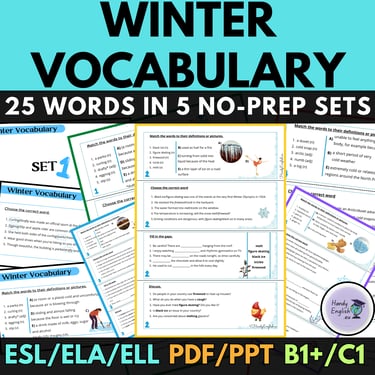
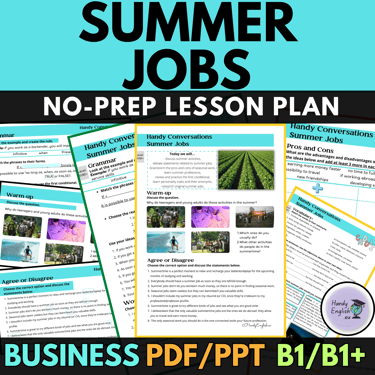
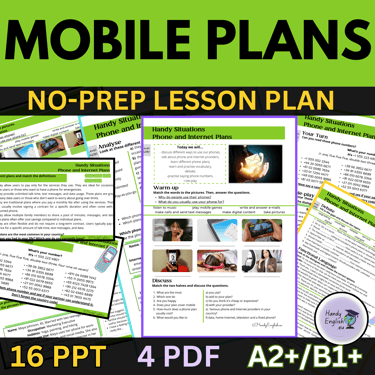
Explore my Handy English materials for new teachers and get practical tools designed for smooth transitions, clear routines, and calmer lessons from start to finish.


Get in touch!
Copyright Handy English 2021
”I used this with an adult ELL tutee of mine. I appreciate that the language was accessible for multiple proficiency levels, but the content wasn't obviously geared for children and still useful for older learners.”
August 7, 2023
”Another great resource from Handy English! I used it to give my students more in-depth practise into quantifiers and restaurant language. It's great resource and can be used after the students learn the basics of language for the restaurants and quantifiers. Definitely helped solidify what they learnt.”
February 5, 2023
”Love this resource. Great for fast finishers and also those in small ESL groups. Great for all macro skills as discussion and brainstorming is a great precursor for writing submissions.”
- Gail M.
June 25, 2023
Here's what other ESL Teachers say
Handy English: 4.8/5
”This was a wonderful resource for my students. It helped me introduce them easily to new concepts and it was quite engaging. Thanks!”
- Kiara B.
October 10, 2023
”Great resource for learning vocabulary, which supports comprehension and speaking skills.”
- Lori-Ann W.
September 29, 2023
”What a great way to get a healthy debate going. My students struggle with impulse control and they all have kept it kind and appropriate.”
- Alicia H.
September 17, 2023


