
[BLOG] Considering Teaching ESL #1: What “Becoming an ESL Teacher” Actually Looks Like (Not Instagram Version)
Becoming an ESL teacher looks far less like pastel classrooms and latte breaks and far more like thoughtful improvisation, emotional labour, and creative problem-solving. This post pulls back the curtain on the classroom reality of teaching ESL, showing what an English teacher actually does day to day - the messy, meaningful, and deeply human parts of the job. If you’re wondering whether an ESL career is right for you, this is your reality check with a wink.
Kaya
2/12/2026
Please keep in mind that the opinions posted on this blog are my own.
Everybody might have a different experience and opinions, and that's OK.
If you’ve ever googled “becoming an ESL teacher,” you’ve probably been served a montage of smiling expats, tidy classrooms, and sunsets over exotic rooftops. It’s a charming aesthetic, but it’s about as accurate as a stock photo of “a day in science.”
Teaching ESL is not a travel influencer reel with a whiteboard in the background; it is a cognitive juggling act, a social negotiation, and a creative performance that happens in real time. Being an English teacher means thinking on your feet, reading a room, and translating complex ideas into human language - sometimes literally, sometimes metaphorically. It is equal parts craft, psychology, and controlled chaos, wrapped in lesson plans that rarely survive first contact with actual humans.
Becoming an ESL teacher is not a single identity shift but a slow metamorphosis into someone who listens differently, explains differently, and sees language as both tool and terrain. The classroom reality is less glossy, far more fascinating, and infinitely more meaningful.
The Myth of the Perfect Lesson
Becoming an ESL teacher quickly dissolves the fantasy of flawless, Pinterest-ready lessons. Classroom reality is that teaching ESL involves constant micro-adjustments, not theatrical perfection. Even the most prepared English teacher will watch a carefully designed activity collapse because students misunderstood one tiny instruction. You learn that good teaching is not about preventing chaos, but about navigating it with calm curiosity. Plans become flexible scaffolds rather than rigid scripts, and your greatest skill becomes adaptation. Over time, you stop measuring success by how closely you followed your plan and start measuring it by how deeply your students engaged. This shift is one of the quiet milestones of a real ESL career.
The Invisible Emotional Labour
People rarely mention that becoming an ESL teacher means doing emotional work that never appears on a syllabus. Teaching ESL requires you to hold space for students’ frustrations, insecurities, and triumphs, often in a language they are still wrestling with. You become part coach, part translator of feelings, part diplomatic mediator. The classroom reality includes comforting a shy learner who freezes mid-sentence and encouraging a confident one who bulldozes over others. An English teacher doesn’t just teach grammar; they manage confidence, identity, and risk-taking. This emotional layer is exhausting at times, but it is also what makes the profession profoundly human.
The Puzzle of Real Communication
Becoming an ESL teacher means realising that language learning is not about rules but about meaning in motion. Teaching ESL is less about drilling structures and more about designing situations where communication actually matters. You learn that students improve not when they repeat perfectly, but when they struggle productively to express something real. Classroom reality is filled with pauses, reformulations, gestures, and laughter - all part of the learning ecosystem. A good English teacher becomes a curator of conversations, shaping tasks that invite genuine interaction rather than robotic recitation. This is where teaching feels most like art and least like a checklist.
The Power and Limits of Authority
Becoming an ESL teacher forces you to rethink what authority means. It is tempting to imagine the English teacher as an unquestioned expert at the front of the room, but classroom reality is far more collaborative. Your authority is not about control; it is about clarity, consistency, and trust. Teaching ESL means balancing confidence with humility, knowing when to guide and when to step back. Students respect teachers who admit uncertainty, explain their reasoning, and treat errors as data, not failures. In this sense, an ESL career is a long lesson in leadership without ego.
The Craft of Explanation
Becoming an ESL teacher is, at heart, an apprenticeship in explanation. Teaching ESL requires you to take abstract concepts - like tense, register, or pragmatics - and translate them into something intuitive. Classroom reality is that you will explain the same idea ten different ways before one finally clicks. You develop metaphors, gestures, stories, and diagrams like a linguistic magician with a very nerdy toolkit. The best English teachers are not those who know the most grammar, but those who can make complex ideas feel simple without being simplistic. This intellectual creativity is one of the hidden joys of the profession.
The Slow Transformation of Identity
Becoming an ESL teacher subtly reshapes how you see the world. Teaching ESL attunes you to accents, word choices, and cultural assumptions you never noticed before. You begin to appreciate how language shapes thought, humour, and power. Classroom reality expands your empathy because you witness daily what it feels like to think in a second language. Over time, your ESL career becomes less about “a job” and more about a way of interpreting communication itself. You don’t just teach English - you become more attentive to how humans connect, misunderstand, and try again.
Becoming an ESL teacher is not the Instagram fantasy of wanderlust classrooms and effortless charm; it is a deeply skilled, intellectually rich, and emotionally demanding profession. Teaching ESL requires flexibility, empathy, creativity, and a willingness to rethink what learning actually looks like. The classroom reality is full of messy moments that reveal the beauty of real communication. An English teacher grows not just in technique, but in perception - learning to see language as a living, social, imperfect system. An ESL career is less about mastering English and more about mastering how people use it to think, feel, and connect. If you are considering becoming an ESL teacher, what awaits you is not a postcard life, but something far better: a career that continually stretches your mind and heart.
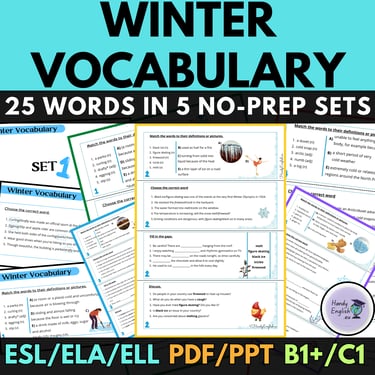
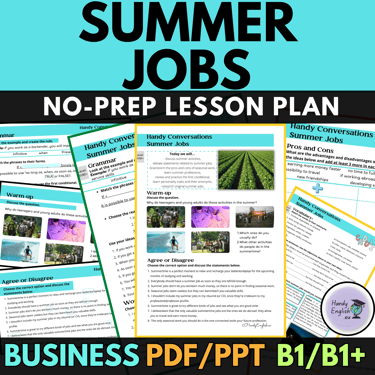
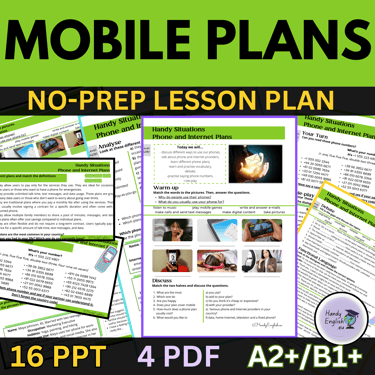
Ready to step into the real classroom reality of teaching ESL?
If you’re seriously considering becoming an ESL teacher, explore my practical, classroom-tested materials that prepare you for the actual work of being an English teacher - not the Instagram version. Check out my Handy English teacher packs and lesson resources to build your confidence, skills, and your future ESL career today.




Get in touch!
Copyright Handy English 2021
”I used this with an adult ELL tutee of mine. I appreciate that the language was accessible for multiple proficiency levels, but the content wasn't obviously geared for children and still useful for older learners.”
August 7, 2023
”Another great resource from Handy English! I used it to give my students more in-depth practise into quantifiers and restaurant language. It's great resource and can be used after the students learn the basics of language for the restaurants and quantifiers. Definitely helped solidify what they learnt.”
February 5, 2023
”Love this resource. Great for fast finishers and also those in small ESL groups. Great for all macro skills as discussion and brainstorming is a great precursor for writing submissions.”
- Gail M.
June 25, 2023
Here's what other ESL Teachers say
Handy English: 4.8/5
”This was a wonderful resource for my students. It helped me introduce them easily to new concepts and it was quite engaging. Thanks!”
- Kiara B.
October 10, 2023
”Great resource for learning vocabulary, which supports comprehension and speaking skills.”
- Lori-Ann W.
September 29, 2023
”What a great way to get a healthy debate going. My students struggle with impulse control and they all have kept it kind and appropriate.”
- Alicia H.
September 17, 2023


