
[BLOG] Teaching Adults: Strategies and Insights #13 - Harnessing Students’ Professional Expertise in the Classroom
Discover how to harness your adult ESL students’ professional expertise to create engaging, relevant, and confidence-building lessons. This post shares practical classroom strategies, real-life examples, and creative activity ideas for using students’ careers and life experiences as powerful learning tools.
Kaya
10/24/2025
Please keep in mind that the opinions posted on this blog are my own.
Everybody might have a different experience and opinions, and that's OK.
Adult students walk into your classroom with a treasure chest of skills, knowledge, and experiences. And yet, too many ESL classes treat them like blank slates. Spoiler alert: they are not blank slates. They’re more like walking, talking encyclopedias with their own quirks, niche trivia, and wildly specific knowledge. Why not use that? After all, if you have a mechanical engineer, a pastry chef, and a marketing manager sitting in the same room, you’re basically running the world’s most diverse think tank - only with a whiteboard and maybe some dodgy markers.
The “expert in the room” approach
Instead of being the sole knowledge fountain, I like to flip the classroom and make my students the experts. For example, I once had a logistics manager give a short “English 101 for Warehouse Chaos” talk, complete with diagrams and vocabulary we never would have found in a coursebook. Another time, a dental hygienist taught us how to give polite but firm oral hygiene advice (and yes, there were toothbrush props). Not only did these activities boost speaking confidence, but they also created hilarious, memorable moments that stuck far better than random role-play scripts.
Creating cross-professional role plays
Mixing professional contexts can make role plays 100 times more engaging. Imagine a lawyer explaining contract terms to a fashion designer, or a teacher negotiating a school trip with a travel agent. These scenarios feel fun but mirror the real-life reality that adults often do need to communicate with people outside their own industries. Plus, it’s a sneaky way to encourage listening for gist and detail, since half the vocabulary will be new to them.
Industry-specific language on tap
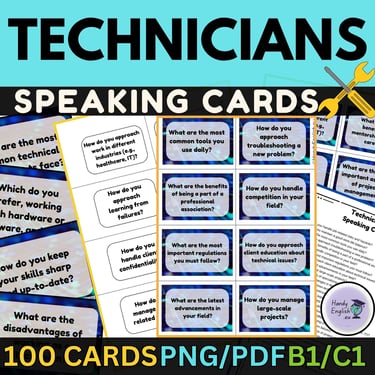
Every job has its own jargon — gold for building relevant vocabulary lists. I’ve had classes where students prepared “Top 10 Useful Phrases in My Job” presentations. An IT technician taught us about “troubleshooting” in plain English, while a hotel receptionist explained “upselling” without sounding like a pushy salesperson. These real-world examples mean you’re teaching English that’s actually going to be used tomorrow morning — not just for an exam in June.
And let’s not forget the “hidden talents” students sometimes don’t even realise are relevant to language learning. I’ve had students who casually mentioned they used to sing in a choir — hello, perfect pronunciation practice. Or a retired engineer who lit up when we used technical problem-solving scenarios as roleplays. The more you get to know your learners’ past lives, the more opportunities you have to weave those abilities into your lessons in ways that feel organic and motivating.
Peer teaching as confidence training
Teaching something in English forces learners to clarify their thoughts, find the right words, and adapt their explanations to their audience’s level. That’s basically language learning gold dust. I sometimes pair students from totally different fields and have them “train” each other on a simple work-related task - how to make a sales pitch, how to follow safety procedures, or how to prepare a perfect cappuccino. The mix of laughter, genuine curiosity, and light panic (“How do I explain latte art in English?!”) is unbeatable.
It’s also worth remembering that bringing in their existing skills doesn’t just make the lesson more engaging - it builds their confidence in a way a generic activity never could. When an adult learner recognises that their background is valuable in this new context, you see their posture shift, their voice grow steadier, and their willingness to participate shoot up. That’s not just good teaching; that’s empowerment.
Why it works - and why students love it
Harnessing professional expertise makes students feel valued, because it acknowledges what they already know and gives them a stage to shine. It also builds a sense of community: your accountant suddenly sees your graphic designer as a brilliant explainer, not just “the guy who sits two seats over.” And for you? It’s a never-ending source of fresh, relevant lesson content - with the bonus of learning weirdly specific facts. (Like the time I found out that carrots really can be too bendy to go through industrial peeling machines. Who knew?)
Get in touch!
Copyright Handy English 2021
”I used this with an adult ELL tutee of mine. I appreciate that the language was accessible for multiple proficiency levels, but the content wasn't obviously geared for children and still useful for older learners.”
August 7, 2023
”Another great resource from Handy English! I used it to give my students more in-depth practise into quantifiers and restaurant language. It's great resource and can be used after the students learn the basics of language for the restaurants and quantifiers. Definitely helped solidify what they learnt.”
February 5, 2023
”Love this resource. Great for fast finishers and also those in small ESL groups. Great for all macro skills as discussion and brainstorming is a great precursor for writing submissions.”
- Gail M.
June 25, 2023
Here's what other ESL Teachers say
Handy English: 4.8/5
”This was a wonderful resource for my students. It helped me introduce them easily to new concepts and it was quite engaging. Thanks!”
- Kiara B.
October 10, 2023
”Great resource for learning vocabulary, which supports comprehension and speaking skills.”
- Lori-Ann W.
September 29, 2023
”What a great way to get a healthy debate going. My students struggle with impulse control and they all have kept it kind and appropriate.”
- Alicia H.
September 17, 2023


