
[BLOG] Teaching Adults: Strategies and Insights #14 - Dealing with Mixed-Ability Groups Without Losing Your Mind
Mixed-ability adult ESL classes can feel chaotic, but they don’t have to drain your energy. This post shares practical strategies, classroom examples, and sanity-saving tips for keeping both beginners and advanced learners engaged without losing your mind.
Kaya
10/31/2025
Please keep in mind that the opinions posted on this blog are my own.
Everybody might have a different experience and opinions, and that's OK.
If you’ve ever stood in front of a class where one student can barely string together “How are you?” while another casually drops phrasal verbs into conversation, you’ll know that mixed-ability groups are… a challenge. A fun challenge? Sometimes. A maddening one? Often. But here’s the good news: it is possible to keep everyone engaged without losing your mind (or your voice).
Layering Tasks Like a Netflix Plot
The first thing to remember is that not everyone has to do exactly the same thing at the same level. If you try to pitch everything down to the lowest level, your advanced learners will be bored out of their skulls. And if you only push the stronger ones, your beginners will sink into silent despair. The trick is layering tasks. Think of it like a Netflix show: the beginners get the main storyline, while the more advanced learners pick up on the witty subplots and hidden references.
Here’s an example: you’re running a discussion on travel experiences. Beginners might work with sentence starters like, “I went to… I liked… I didn’t like…” Meanwhile, advanced learners can jump in with more nuance: “One of the most memorable aspects of my trip was…” Same activity, two levels of challenge, and nobody feels left behind.
Smart Grouping for Maximum Impact
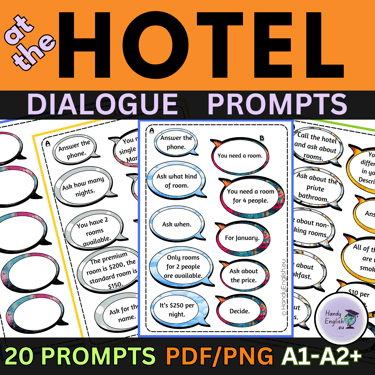
Group work can also save your sanity. Pair weaker learners with stronger ones - but not always. Sometimes, it’s better to group students by level so the beginners can feel safe practising without intimidation, and the advanced students can stretch themselves with more demanding tasks. You can even set up “tiered” activities, like giving one group a straightforward roleplay at a hotel while another group creates a skit that adds in a cultural misunderstanding. Same theme, different complexity.
Autonomy: Because You’re Not a Referee
And don’t underestimate the power of autonomy. Give your learners choices. Let them pick from a list of discussion questions, writing prompts, or listening tasks that range in difficulty. That way, students naturally gravitate towards something they feel comfortable with - and you don’t have to play referee every two minutes. I once had a mixed-level class design their own mini-presentations: one student made a simple “About Me” slide with pictures, while another gave a five-minute talk on renewable energy policies. Both felt challenged, both felt successful.
Of course, the real sanity-saver is letting go of the idea that everyone has to be perfectly “equal.” That’s not the goal. The goal is progress. If your beginner manages to say their first complete past tense sentence while your advanced learner nails an idiom in context - you’ve done your job. Everyone has moved forward, and that’s the sweet spot.
So yes, mixed-ability classes are messy. But they can also be dynamic, surprising, and oddly rewarding. If you embrace flexibility, give students choices, and stop chasing “perfect balance,” you might just find that teaching these groups stretches you as much as it stretches them.
Get in touch!
Copyright Handy English 2021
”I used this with an adult ELL tutee of mine. I appreciate that the language was accessible for multiple proficiency levels, but the content wasn't obviously geared for children and still useful for older learners.”
August 7, 2023
”Another great resource from Handy English! I used it to give my students more in-depth practise into quantifiers and restaurant language. It's great resource and can be used after the students learn the basics of language for the restaurants and quantifiers. Definitely helped solidify what they learnt.”
February 5, 2023
”Love this resource. Great for fast finishers and also those in small ESL groups. Great for all macro skills as discussion and brainstorming is a great precursor for writing submissions.”
- Gail M.
June 25, 2023
Here's what other ESL Teachers say
Handy English: 4.8/5
”This was a wonderful resource for my students. It helped me introduce them easily to new concepts and it was quite engaging. Thanks!”
- Kiara B.
October 10, 2023
”Great resource for learning vocabulary, which supports comprehension and speaking skills.”
- Lori-Ann W.
September 29, 2023
”What a great way to get a healthy debate going. My students struggle with impulse control and they all have kept it kind and appropriate.”
- Alicia H.
September 17, 2023


